
Should I repair or sell my car?
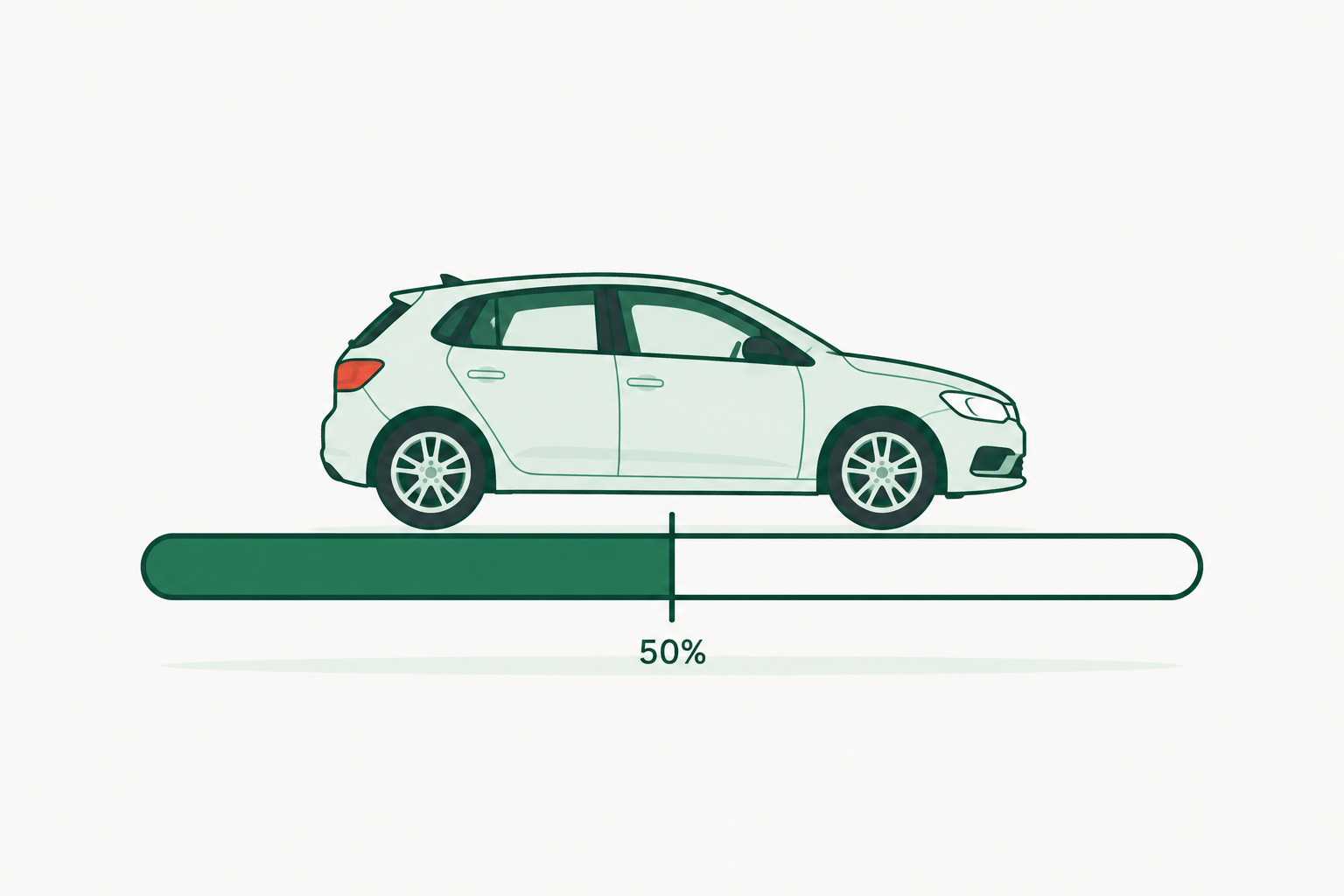
One line decides it: if the repair costs more than half what the car is worth, lean towards selling.
How to get both numbers, when repairing still wins, and the mistake that makes people overspend.
- Repair costs under half the value
- Usually repair. You’re restoring a car worth more than the bill in front of you.
- Repair costs more than half the value
- Usually sell. The bill buys back less than it costs, and won’t lift the car above market value.
- Otherwise sound, full history
- It depends. A known car with one bill can beat an unknown replacement with hidden ones.
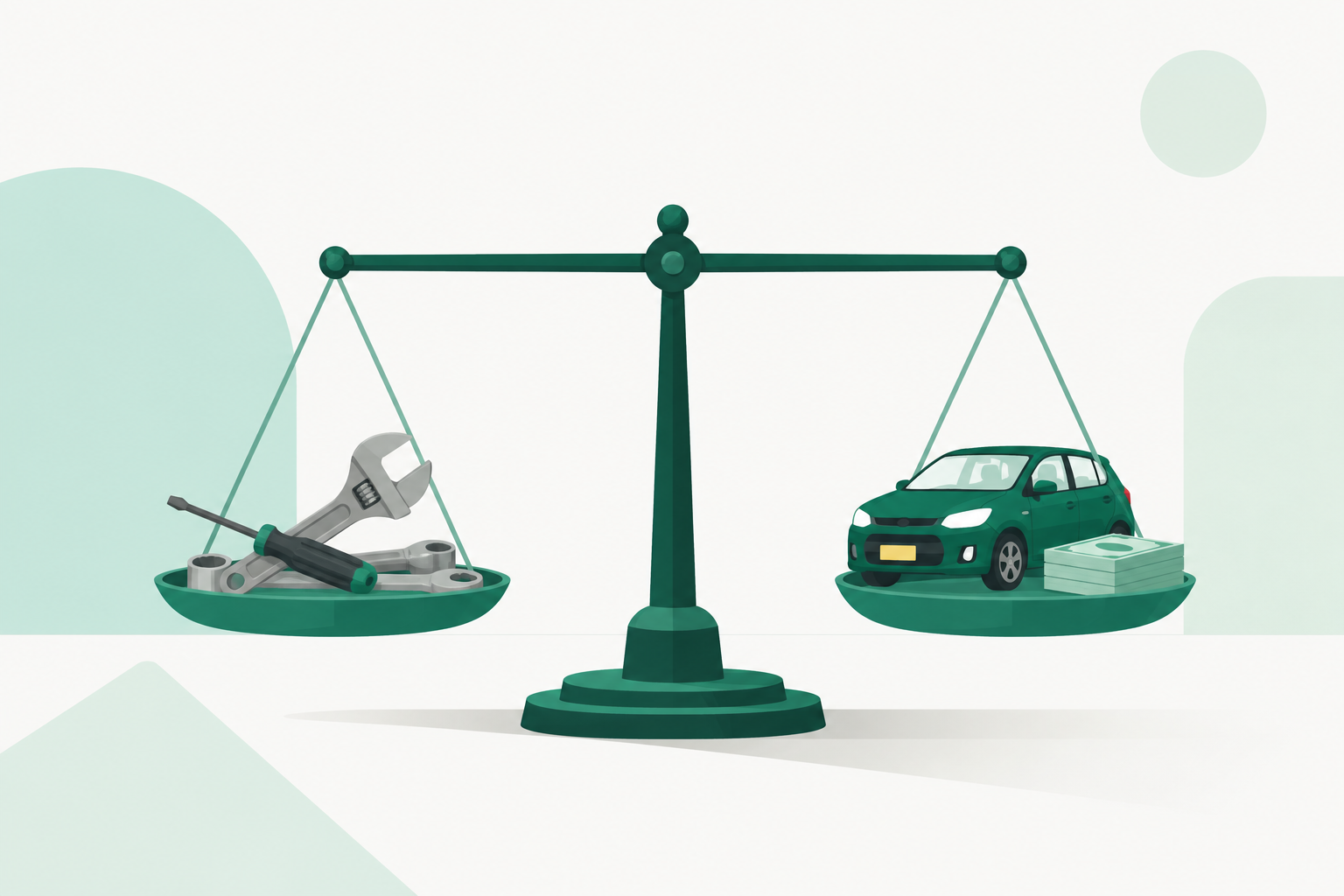
Sell if the repair costs more than half your car’s current value; repair if it costs less. On a car worth £2,000, a £1,200 clutch rarely makes sense, but £450 brakes do. The figure that decides it is the repair quote set against the car’s value — not the age of the car, and not how the repair feels. Get both numbers first and the choice is arithmetic, not emotion.
What is the half-the-value rule?
The half-the-value rule says that once a repair costs more than 50% of what your car is currently worth, selling is usually the better financial choice. It is the standard rule of thumb mechanics and money writers use to cut through the emotion of a big bill, and it works because a repair can only ever restore a car to its market value — it cannot push it above it.
Spend £1,500 rebuilding an engine in a car worth £1,800 and you own an £1,800 car, not a £3,300 one. The rule is a line, not a law: it tells you when to stop and check the maths rather than hand over the keys on trust. Two figures make that check, and most people only ever get one of them.
A repair can restore your car’s value. It can never add value above what the same car sells for. That single fact is the whole decision.
What’s your car actually worth?
Get a free valuation before you approve any repair, because the value is half of the sum and it is almost always lower than owners expect. Enter your registration and mileage and you get a realistic figure in under a minute — start on our car valuation page.
Use two reference points and take the lower one for the decision: a trade or instant-buyer value, which is what you would realistically get quickly, and a private-sale price, which is the optimistic ceiling. The gap between them is often £1,000–£2,000, and which one applies to you is covered in trade-in vs private sale. Mileage, service history and MOT status all move the figure, so a car with a fresh fault is worth its working value minus the repair — which is exactly why fixing first and then selling sometimes nets more than selling as-is.
How do I price the repair fairly?
Get a realistic range for your exact job before you commit — not the first number a garage gives you. A clutch on a common hatchback runs about £400–£1,010 at an independent garage; a head gasket can run far higher; brake pads and discs are usually £180–£460 an axle. Knowing the fair range tells you whether a quote is reasonable and feeds straight into the rule.
Our cost guides give independent-garage ranges by model, and the repair quote checker tells you whether a quote you have already been given is fair or dealer-territory. An inflated quote is worth catching here, because it can wrongly tip a car over the half-the-value line and push you into selling a car that was fine to keep.
| Common repair | Typical independent range | Price it |
|---|---|---|
| Clutch | £400–£1,010 | Clutch cost |
| Head gasket | Often the decider on older cars | Head gasket cost |
| Brake pads & discs | £180–£460 per axle | All repair costs |
Repair or sell, by the numbers
Divide the repair quote by the car’s value and read across. The percentage does the work; the examples show what it looks like in practice.
| Repair as a share of value | Lean | Worked example |
|---|---|---|
| Under 30% | Repair | £450 brakes on a £3,000 car — restores a car worth far more than the bill |
| 30%–50% | Usually repair | £700 clutch on a £1,800 car — sound if the rest of the car is healthy |
| 50%–80% | Usually sell | £1,200 repair on a £2,000 car — the bill buys back less than it costs |
| Over 80% / near the value | Sell | £1,500 repair on a £1,700 car — spending almost the whole value to stand still |
Values are illustrative. Use your own two figures — repair quote and valuation — and the line falls where it falls.
Don’t compare the repair to zero. Compare it to the true cost of the next car — purchase, transfer, insurance, and the repairs it will need that you can’t yet see. A known car with one bill often beats an unknown car with several.
When does repairing still win above the line?
Repair beyond the 50% line when the car is otherwise sound, you know its history, and a replacement would cost more to buy and insure. Three cases tip it back towards keeping the car.
Full history and no other faults. One big bill on a car with a documented life ahead of it buys years, not months — you are not inheriting someone else’s unknowns. A preventative job rather than a catastrophe. A clutch or a cambelt that protects the engine is restoring a working car, not rescuing a dying one. A replacement that costs more than it looks. Once you add the price of the next car, its insurance and its own hidden repairs, the single bill in front of you can be the cheaper path. Run the is my car worth fixing tool to see where the line sits for your figures.
Cheap repair, sound car, full history
The bill is a small share of a value you can trust.
Repair. This is the clearest keep there is.
Repair near half the value, rest of car healthy
Borderline — the decision turns on history and the next car.
Price the replacement before you choose. Often still worth repairing.
Big repair, low value, unknown history
You’d spend most of the value and still own an unknown car.
Sell. Don’t pour money into it — get a valuation instead.
Should I repair or sell a car that failed its MOT?
Total the failure items first, then apply the rule. Most MOT failures are cheaper than owners fear — worn brake pads, a blown bulb, a corroded pipe — and a car can’t be driven on a failed MOT except to a pre-booked test or repair, so the choice is repair-and-keep, repair-and-sell, or sell to a trade buyer who takes failures.
Our MOT advisory checker turns the wording on your certificate into plain English and a price band, so you can add the failures up before deciding. If the total clears the half-the-value line, a buyer who handles MOT failures is often the cleaner exit than sinking money into a car you were going to change anyway. Selling a car with a live fault is its own question — covered in what affects your car’s value.
If you decide to sell
If the maths says sell, get an instant valuation and weigh a quick trade sale against a private one. An instant online buyer is fastest and takes the car faults and all, but pays least; a private sale pays most but is slowest and hardest with a fault; part-exchange is convenient but weakest on price. The full comparison is in how to sell your car.
For a car with a live fault, the honest comparison is the sale price now against the repair cost plus the higher sale price afterwards. Sometimes fixing a cheap fault lifts the price by more than it costs; with a big fault, selling as-is usually nets more once you account for the bill.
See what your exact car is worth — trade-in, part-exchange and private — so you have the number the rule needs.
Value my carRun the numbers in five steps
-
Get the repair quote for your exact car
Use the model cost guide or the quote checker so you’re working from a fair figure, not the first number offered.
-
Get the car’s current value
An instant valuation by reg and mileage. Take the realistic trade figure, not the optimistic private asking price.
-
Divide repair by value
Under 50% and repairing is usually sound. Over 50% and selling is usually smarter — unless an exception above applies.
-
Price the replacement, honestly
Before selling, cost what you’d replace it with — purchase, insurance and the unknown repairs it will bring. That’s the real comparison, not repair-versus-nothing.
-
Decide, then act on the lower-cost path
Book the repair, or take a valuation and sell. Either way you’re acting on two numbers, not a hunch — which is the whole point.
The one figure people skip is the replacement cost. “Repair or scrap” feels like the choice; “this repair or the next car’s bills” is the real one — and it changes the answer more often than the rule itself does.
FAQ
Should I repair or sell my car?
Sell if the repair costs more than half your car’s current value; repair if it costs less. On a £2,000 car, a £1,200 repair usually means sell, while £450 usually means repair. Get the repair quote and the valuation first, then the decision is simple arithmetic.
What is the 50% rule for car repairs?
The 50% or half-the-value rule says that once a repair costs more than half the car’s current market value, selling usually beats repairing. It’s a rule of thumb rather than a law — service history and the cost of replacing the car can move the line either way.
Is it worth repairing a car worth less than the repair?
Rarely. If the repair costs more than the car is worth, you’re spending more than you could ever recover. The exception is a car you know is otherwise sound, where the replacement plus its unknown faults would cost more than the single repair in front of you.
Should I repair a car that failed its MOT?
Total the failure items first, because most are cheaper than expected. If the total is under half the car’s value, repair and keep or sell. If it’s over, a trade buyer who takes MOT failures is often the cleaner exit. The MOT advisory checker prices the wording on your certificate.
Does a big repair make sense on an old car?
Age matters less than value and history. A high-mileage car with full history and one preventative repair can be a bargain to keep; a low-mileage car of unknown history with a catastrophic fault often isn’t. Compare the repair to the value, not to the year.
Is it better to repair and sell, or sell as-is?
Compare the sale price now against the repair cost plus the higher sale price afterwards. Sometimes fixing a cheap fault lifts the price by more than the repair; often, with a big fault, selling as-is to a trade buyer nets more once you account for the bill.
How do I find out what my car is worth?
Use a free instant valuation by registration and mileage. Take two figures — a quick trade or buyer price and a private asking price — and use the lower one for the repair-or-sell decision, since that’s what you’d realistically get.
What if the replacement car needs repairs too?
That’s the number owners forget. The real comparison isn’t repair-versus-nothing; it’s your repair versus the purchase, insurance and hidden repairs of the next car. A known car with one bill often beats an unknown car with several.