
DPF light on — what it means and how to clear it
On its own it is usually a driving job, not a repair — but two extra symptoms change that completely.
Which lamp is which, what a regeneration actually needs from you, and the MOT rules that make removal a false economy.
- DPF light on its own
- Soot is high and the car wants a long, steady run. Do it now rather than next week.
- DPF light plus engine light
- Past the point where driving helps. Book it in for a forced regeneration.
- Power dropped to a crawl
- Limp mode. Drive it to a garage, not up the motorway — the long run will not save it now.
A DPF light on its own means the filter is holding more soot than the car wants to carry and the engine has not managed to burn it off. On most cars a sustained run at motorway speed clears it. If the engine light joins it, or power drops away, driving will not fix it and it needs a garage — and what to ask for when you get there matters more than the price.
Which lamp is actually on?
Before anything else, be sure which light you are looking at, because three amber lamps on a diesel dashboard mean three different things and only one of them is asking you to go for a drive.
The filter lamp is usually drawn as a box or canister with dots or wavy lines coming out of it, and it is not a fault light in the ordinary sense — it is a request. Left alone it becomes a fault; answered promptly it costs you a tank of fuel and nothing else.
The engine management light is a different lamp with a different job, and if it comes on alongside the filter light, the car has stopped asking and started recording a fault — our guide to what the engine management light means covers that side. The coil symbol that looks like a spiral is the glow plug lamp, which has nothing to do with the filter; if it is flashing or staying on, the glow plug replacement cost page is the right place to start instead.
Filter light on, steady, car drives completely normally
Soot loading has crossed the threshold where the car wants your help to clear it.
Take it for a long, steady run in the next day or two — details in the section below.
How to be sure
Power is the giveaway. At this stage the car pulls exactly as it always has, and the only thing that has changed is the dashboard. Nothing is broken yet and nothing needs replacing. If it still pulls properly, you are in the cheapest version of this situation there is.
Light comes on every few hundred miles, then goes off again on its own
The filter is completing its cycles, but your journeys are too short for it to do so quietly.
Nothing urgent. Add one longer run a fortnight and it will stop appearing at all.
How to be sure
Keep a rough note of when it appears and when it clears. A pattern tied to a week of school runs and shopping trips, breaking whenever you do a longer journey, is a usage pattern rather than a fault. A car used almost entirely on short cold trips will do this for its whole life without anything being wrong with it.
Fan roaring after you park, hot smell, idle sitting higher than usual
A regeneration is running right now. The car is deliberately making the exhaust very hot.
Nothing. If you can, keep driving until it finishes rather than switching off mid-cycle.
How to be sure
The combination is distinctive: raised idle, cooling fan working hard after a run, and a hot, slightly acrid smell from underneath that is nothing like a leak burning on a manifold. If you are not sure which you have, our guide to burning smells from a car separates the harmless smells from the ones worth stopping for.
Filter light plus engine management light, power noticeably softer
The car has given up trying to regenerate on its own and has stored a fault instead.
Book it in this week for a forced regeneration. Driving further will not clear this one.
How to be sure
Try one proper motorway run first, because a single interrupted cycle can look like this. If both lamps are still there afterwards, the car has locked the automatic process out and only a garage tool can restart it. Carrying on regardless is how a filter that could have been cleaned turns into one that has to be replaced.
Power down to a crawl, will barely pull away, revs capped low
Limp mode. The engine management system is protecting itself from exhaust it cannot push out.
Straight to a garage, by the shortest route. No long clearing runs from here.
How to be sure
Limp mode is unmistakable rather than subtle — the accelerator stops meaning much and the car will not exceed a modest speed however hard you press. Do not attempt a motorway trip to fix it. Limp mode caps the revs, which caps the exhaust temperature, which is precisely the thing a regeneration needs.
Oil level has risen above the maximum mark and smells of diesel
Repeatedly interrupted regenerations. Unburnt fuel has washed past the rings into the sump.
Do not keep driving it. Diluted oil is an engine problem, not a filter problem.
How to be sure
Check the dipstick cold and on level ground. Oil that has climbed above maximum on a car nobody has topped up, especially if it smells thin and fuelly, is the classic signature. Say it plainly when you book the car in, because it changes what the garage should do first and it is the one version of this fault that can cost you far more than a filter.
What the light is actually asking you to do
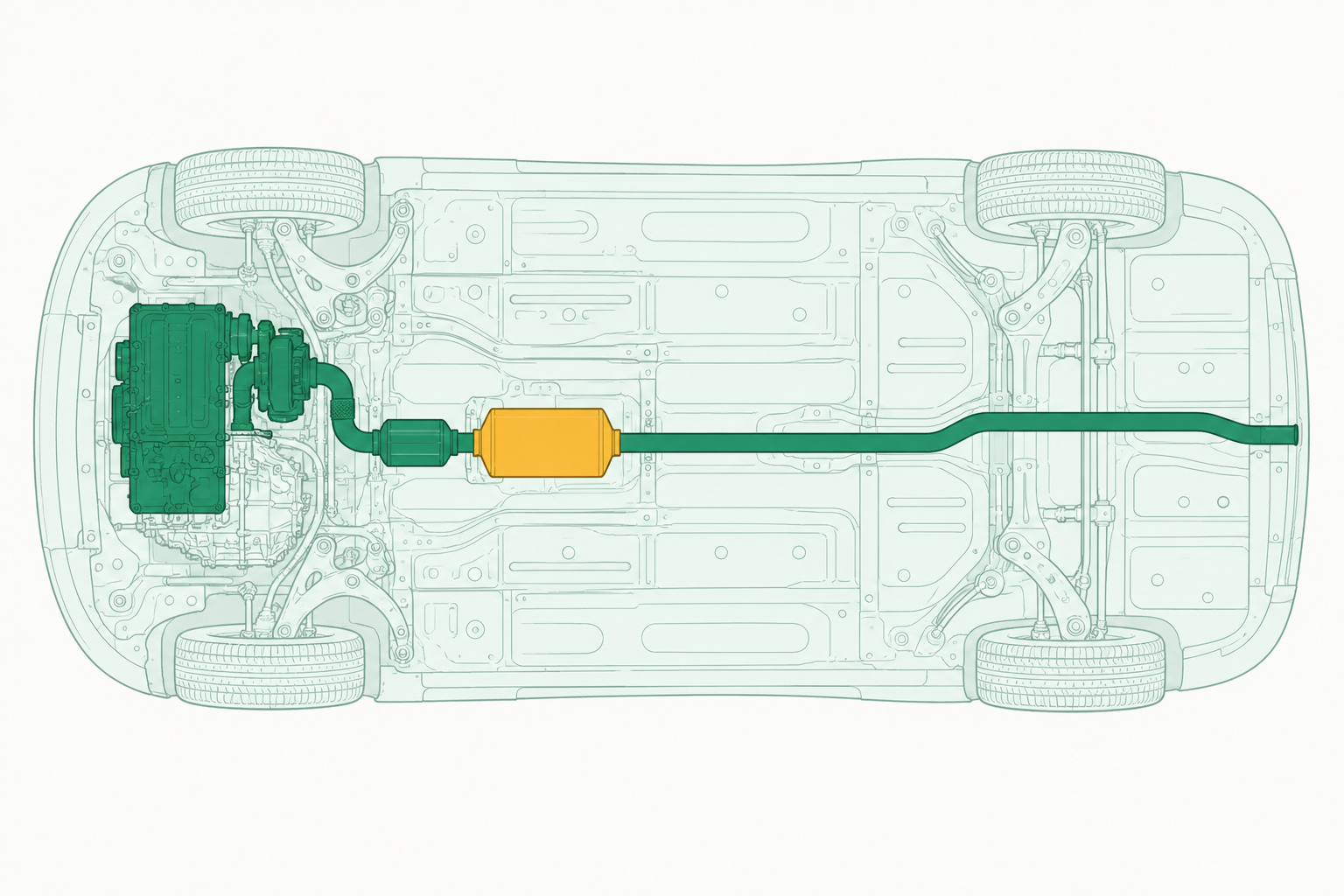
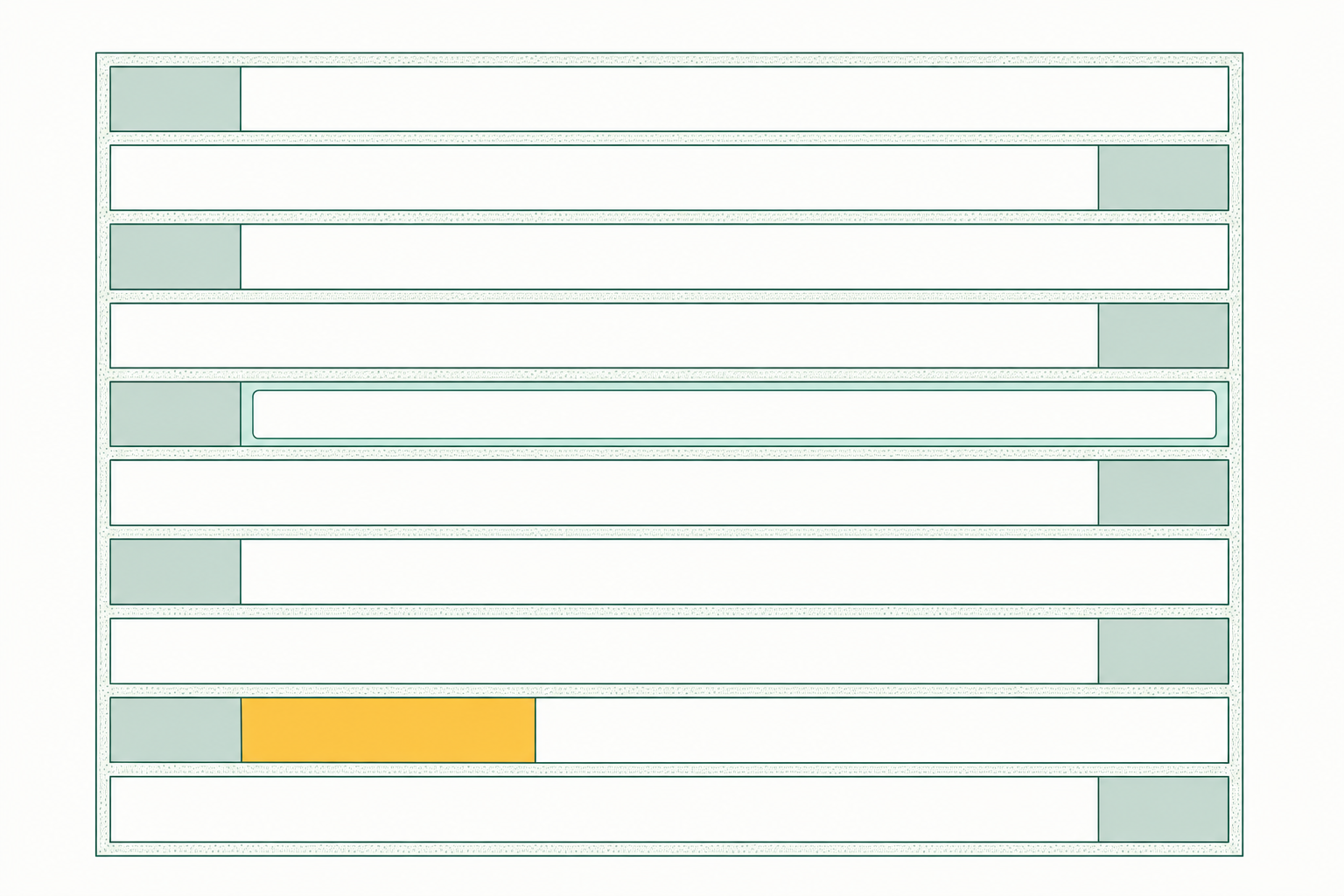
The filter is a ceramic honeycomb with alternate channels blocked at each end, so exhaust gas has no choice but to pass through the porous walls between them. Soot cannot follow, so it collects on the walls. That is the whole design, and it works — which is why it needs emptying.
Emptying happens by burning. Get the filter hot enough for long enough and the trapped soot oxidises away as gas, leaving the honeycomb clear. This is regeneration, and the car normally does it without telling you: on a longer run the exhaust is already hot, so the engine nudges the fuelling, the temperature climbs past the point where soot ignites, and a few minutes later it is done.
Short journeys break that arrangement. A cold engine on a ten-minute trip never gets the exhaust hot enough to start a cycle, so soot builds up with nothing removing it. Past a threshold the car tries anyway, regardless of conditions — and if you park before it finishes, the cycle is abandoned and the soot stays. Repeat that a few times and the lamp comes on.
There is a second reason not to switch off mid-cycle, and it is the expensive one. On many engines a regeneration is triggered by injecting extra fuel late in the stroke. Cut the process short repeatedly and some of that fuel ends up washing down the bore into the sump, thinning the oil and raising the level on the dipstick. A filter light you keep ignoring can turn into an engine problem, which is why oil rising above maximum on its own belongs in the red group above.
Can you clear it yourself? Often, yes
If the filter lamp is the only thing lit and the car still pulls properly, a drive is the correct answer and it is free. What the car needs is not speed for its own sake but sustained load: enough exhaust heat, held long enough, without stopping.
In practice that means a dual carriageway or motorway, a steady speed within the limit, and somewhere between fifteen and thirty minutes of continuous running with the engine warm before you start. A lower gear than you would normally choose helps, because higher revs at the same road speed mean a hotter exhaust — around two thousand revs and above is the useful range on most diesels. Cruise control is fine. Stop-start traffic is not, because every deceleration cools the exhaust and can abandon the cycle.
Your handbook may give a specific procedure — a gear, a speed range, a duration — and if it does, follow that rather than this page. Either way, do not park the moment the light goes out: give it a few more minutes to finish, and expect the smell and the busy cooling fan described above. If the lamp is back within a week, the drive was never the problem and something is filling the filter faster than it can empty.
When driving will not clear it
Once the engine management light joins in, or the car drops into limp mode, the automatic process has been locked out and no amount of motorway will restart it. From there the options form a ladder, and the whole point is to get on the lowest rung that will actually work.
A forced regeneration is the first rung. A garage connects a diagnostic tool, commands the cycle directly and holds the engine at the conditions it needs while the filter burns clear. It takes well under an hour on a car that responds, and it is the cheapest intervention there is.
Cleaning is the second. If loading is too high for a forced cycle to work, the filter can be flushed in place or taken off and cleaned properly. Off-car cleaning costs more and does more, because it removes deposits burning never will.
Replacement is the last rung, and it is the one worth working hard to avoid. It is also sometimes unavoidable: ash from oil additives accumulates over the filter’s whole life and does not burn off at any temperature, so a filter that has done a very high mileage can be genuinely full rather than merely blocked. Ranges for all three, and the reason the gap between them is so wide, are on our DPF cleaning cost page. If the car is old enough that the filter is worth a noticeable slice of its value, our is my car worth fixing tool is the honest way to frame that decision.
Insist on one thing whichever rung you land on: ask what caused it. A forced regeneration on a car with a leaking injector buys a few hundred miles and no more, and a new filter fitted to the same car blocks again. Whether that question gets asked properly depends a good deal on where you go, which is what our comparison of independent garages and main dealers is for.
Why it blocked in the first place
Short journeys, and only short journeys. The commonest cause by a wide margin, and not a fault at all. A diesel used for a few miles at a time never reaches the temperature at which the filter can look after itself. Nothing is broken; the car is simply doing a job it was not designed for.
Something is making more soot than it should. A worn or leaking injector puts too much fuel into the cylinder and the surplus leaves as soot — the fuel injector replacement cost page covers that job. A tired turbo does the same by getting the air side of the equation wrong, and often shows itself as smoke you can see; the turbo replacement cost page and our guide to what the colour of your exhaust smoke means both start there.
The EGR valve is stuck open. It recirculates exhaust gas to lower combustion temperature, which is useful for one kind of emission and directly unhelpful for the filter: cooler combustion, more soot, less exhaust heat to burn it with. A valve stuck open runs that trade permanently and is a classic reason a filter keeps refilling — see EGR valve replacement cost.
The car cannot tell how full the filter is. Loading is not measured directly. It is inferred from a pressure difference across the filter and from temperature sensors. A blocked pressure pipe or a failed sensor produces a filter light with no blockage behind it, and a car that either refuses to regenerate or keeps trying when there is nothing to burn. It is worth ruling out before anyone quotes for the filter itself.
The wrong oil went in. Filters need low-ash oil to the manufacturer’s specification, because ash is the part that never leaves. A cheap fill of the wrong grade shortens the filter’s life measurably and invisibly — one of the few strong arguments for caring what gets poured into your engine, which our car service cost page covers.
The catalyst upstream has failed. The filter relies on the catalyst ahead of it to raise exhaust temperature during a cycle. If that has broken down, the filter never gets hot enough however you drive — see catalytic converter replacement cost.
Why having it cut out is a false economy
There is a trade that will remove the filter, hollow out the canister and adjust the software so the car stops asking about it. It is cheaper than a replacement filter, the dashboard goes quiet, and that is the whole of the case for it.
Against it: driving a car on the road with its emissions equipment removed is an offence, because the car no longer meets the standard it was approved to. The MOT has one defect for the missing part and another for evidence of tampering, both straight fails — codes in the table below. Insurers treat it as an undeclared modification, which is a problem at exactly the moment you need them not to have one. And it is discoverable, because a cut-and-rewelded seam is precisely what a tester is told to look for.
Then there is resale. A buyer who spots it walks away; a buyer who does not becomes the person you sold an MOT problem to. The lowest rung of the ladder above is almost always cheaper than the shortcut.
What your MOT already told you — and what it could not
Here is the part that surprises most people. The inspection manual has plenty to say about your filter and nothing at all to say about your filter warning light. The lamp the test cares about is the engine management light; the filter lamp does not appear in the document.
| What the tester checks | Defect code | Category | What it means for you |
|---|---|---|---|
| Emission control equipment fitted by the manufacturer: missing, obviously modified or obviously defective | 8.2.2.1 (a) | Major | The removal fail. A car that came with a filter has to still have one |
| Evidence that the particulate filter has been tampered with | 8.2.2.1 (c) | Major | A cut-open and rewelded canister is rejected unless you can show a legitimate reason for opening it |
| Any visible smoke, of any colour, from a car fitted with a filter | 8.2.2.2 (d) | Major | A working filter should let nothing visible out. This is the rule that catches a failed one |
| Smoke or vapour heavy enough to obscure other drivers’ vision | 8.2.2.2 (c) | Dangerous | The harshest category in the whole emissions section — do not drive it away |
| Metered smoke level above the limit on the manufacturer’s plate | 8.2.2.2 (a) | Major | The measured test. A filter can be substantially loaded and still sit inside this limit |
| Engine management light inoperative or showing a fault | 8.2.2.2 (g) | Major | The only dashboard lamp in the section. This is why the second light matters and the first does not |
The manual tells testers to inspect only components that are visible and identifiable, and for the filter that means two questions: is it there, and has it been interfered with. There is no test of whether it works.
So a heavily loaded filter on a car that is not yet smoking, with the filter lamp lit and the engine light off, has nothing in the manual to fail it on. A pass is not a statement that your filter is healthy. It is a statement that the filter is present, untampered with, and was not emitting visible smoke on the day.
The metered check is more forgiving than it sounds, and deliberately so. Testers work to the smoke limit on the car’s own plate, and where that figure is very low they must add a small margin before testing so ordinary manufacturing tolerances do not fail a healthy car. The test also passes a car outright if the first acceleration comes in comfortably under its limit. Both rules exist to prevent false failures, and both mean the check is not designed to catch a filter merely on its way to being full.
Two more gaps. There is no road drive, so nothing is measured under the sustained load where a struggling filter shows itself. And limp mode caps the revs, which can make a full smoke test impossible to complete at all — the manual has separate codes for a test that cannot be finished.
If your last certificate mentioned the exhaust or emissions, our page on what MOT advisories mean explains how that language works and how to read your MOT history shows how to spot a pattern building across several tests. To decode a specific line from your certificate, paste it into the MOT advisory checker. For what the test itself costs and what it does not include, see MOT cost.
Check it yourself in five minutes
-
Identify the lamp in the handbook
Find the symbol in the dashboard section and confirm it is the filter, not the engine management light or the glow plug coil. What you do next depends entirely on which one it is, and the three are easy to confuse.
-
Check whether the power is still there
Pull away normally and note whether the car feels like itself. Full power with one amber lamp is the cheap version. Soft power, or a hard limit on speed, is the version that needs a garage rather than a drive.
-
Look at the oil, cold and level
Pull the dipstick before starting the engine. If the level is above maximum on a car nobody has topped up, or the oil smells thin and fuelly, stop and book it in — that is diluted oil, and it outranks the filter question.
-
Do one proper run and record the result
A steady twenty minutes at motorway speed in a lower gear than usual, engine warm. Note whether the lamp went out and how many miles it stayed out for. That one fact tells a garage more than any description of the symptom.
-
Ask for the soot loading figure — this is the bit you cannot do
How full the filter is, and how much of that is ash rather than soot, exists only as data read through a diagnostic port. Nothing you can see, hear or smell separates a filter that will clear with one good drive from one at the end of its life. Ask for the number, and ask which it is.
That last distinction decides the whole bill. Soot burns off and costs you fuel. Ash does not burn off at any temperature and is the reason a filter eventually needs cleaning off the car or replacing. Any quote that skips the measurement is a guess wearing a price tag.
Forced regeneration, off-car cleaning and replacement, priced by make and model, with what the same work costs at a dealer.
See DPF pricesFAQ
What does the DPF light mean?
It means the particulate filter is holding more soot than the car wants to carry and has not been able to burn it off. It is a request rather than a fault report: the car is asking for a longer, hotter run so it can complete a regeneration. Ignored for long enough, it does become a fault.
Can I clear a DPF light myself?
Often, yes, if it is the only lamp lit and the car still pulls normally. A sustained run at motorway speed in a lower gear than usual, with the engine warm, gives the filter the heat it needs to burn the soot away. If the engine management light is on too, driving will not clear it.
How long do I need to drive to clear a DPF light?
Somewhere between fifteen and thirty minutes of continuous running at a steady speed, on a dual carriageway or motorway, with the engine already warm. Stop-start traffic does not count, because every deceleration cools the exhaust and can abandon the cycle. Check your handbook, because some manufacturers specify a procedure.
Is it safe to drive with the DPF light on?
With that lamp alone and normal power, yes, and driving is in fact the fix. It stops being safe to ignore once the engine management light joins it, once power drops away, or once the oil level rises above maximum, which points at fuel diluting the oil rather than at the filter itself.
Will a DPF light fail an MOT?
Not on its own. The inspection manual has no entry for the filter warning lamp at all, and the only dashboard light it checks is the engine management light. What does fail is a filter that is missing, shows evidence of tampering, or lets any visible smoke out of the exhaust.
Can I just have the DPF removed?
It is an offence to drive a car on the road once its emissions equipment has been removed, because the car no longer meets the standard it was approved to. The MOT has a defect for missing equipment and another for evidence of tampering, both Major, and insurers treat it as an undeclared modification.
Why does my DPF light keep coming back?
Either your journeys are too short for the filter to look after itself, or something is filling it faster than it can empty. The usual culprits are a leaking injector, a tired turbo, an EGR valve stuck open, a failed pressure sensor, or oil of the wrong specification leaving ash behind.
Does a blocked DPF always mean a new filter?
No, and replacement should be the last option considered rather than the first. A forced regeneration through a diagnostic tool is the cheapest step, off-car cleaning is the middle one, and a new filter is genuinely needed mainly where ash rather than soot has filled it after a very high mileage.